Chronic EBV Diet: Supportive Nutrition, Limits, and Red Flags


A patient arrives having read that her fatigue, brain fog, and intermittent gland swelling are caused by chronic Epstein-Barr virus (EBV). She has searched for the best diet for chronic Epstein-Barr virus, started a restrictive anti-EBV protocol, and brought a positive EBV immunoglobulin G (IgG) result that another clinician described as reactivation. Her symptoms are real and her search for an explanation is reasonable. That explanation is not supported by current understanding of how EBV behaves in latency or by an isolated positive EBV IgG result, and no dietary intervention has been shown to clear the virus.
EBV is one of the most common human viruses. More than 90% of adults carry it after a primary infection that is often silent, and the virus then establishes lifelong latency. (3) Positive EBV IgG antibodies are therefore expected in most adults and do not, on their own, indicate active disease. Fatigue can persist after acute infection, sometimes for weeks to months, but the lay term chronic EBV covers several distinct situations that carry very different stakes, and persistent symptoms call for a broader evaluation. (1)
This article presents diet as supportive care for overall nutritional status, address correctable deficiencies, and support patients experiencing fatigue and inflammatory symptoms associated with EBV-attributed or post-viral fatigue, not as an antiviral treatment. It clarifies the terminology, discusses a Mediterranean-style diet as supportive nutrition when clinically appropriate, prioritizes deficiency and differential assessment, treats restrictive diets as conditional tools matched to a specific indication, and preserves red-flag triage. A supportive diet may help support nutritional needs during recovery, but it does not cure or eliminate EBV.
Ready to start delivering better patient care?
Join 100,000 healthcare providers who rely on Fullscript to dispense top-quality supplements and labs to their patients.
Clarifying chronic EBV before recommending a diet
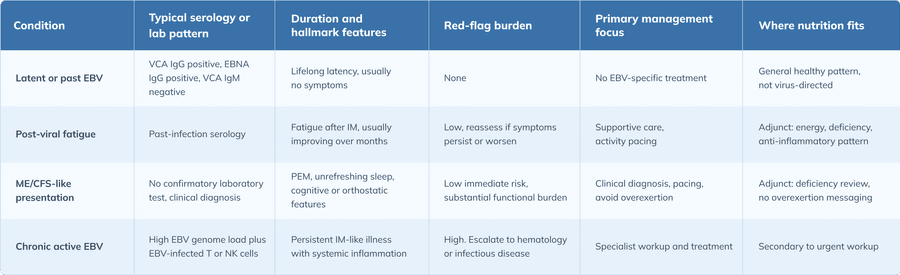
Patients group several conditions under chronic EBV, and these conditions differ in prognosis and in whether nutrition is adjunctive or secondary to urgent workup.
What patients mean versus what serology shows
In wellness and integrative settings, chronic EBV and EBV reactivation describe a persistent illness attributed to an ongoing active infection, usually anchored to a positive antibody result. These terms do not correspond to recognized clinical entities, because a positive EBV antibody is the expected finding in most adults rather than, by itself, a sign of active disease. More than 90% of adults carry antibodies to EBV from an infection acquired years earlier, and those levels can stay elevated for years without indicating recent or active infection. (3)
Anti-viral capsid antigen (VCA) immunoglobulin G rises during acute infection and then persists for life, so its presence indicates past exposure rather than current activity. (3) The patterns often described as reactivation are less specific than the term suggests. Antibodies to the early antigen are detectable in clinically healthy people and do not confirm any stage-specific diagnosis, and a quantitative VCA IgG titer carries the same limitation. (5) In an immunocompetent patient with nonspecific fatigue, a serologic pattern described as "reactivation" may be compatible with ordinary past infection.
A positive IgG is a near-universal finding and does not by itself explain chronic fatigue. The antibody result is interpretable only alongside the symptom history, the timing relative to any acute illness, the examination, and a differential, the context in which laboratory testing in fatigue tends to be most useful. (11) A positive or high antibody value, read in isolation, does not establish active disease.
Distinct clinical entities to separate at intake
Post-infectious fatigue follows acute infectious mononucleosis (IM) in a minority of patients and usually improves over months. In a prospective adolescent cohort, 13%, 7%, and 4% met criteria for chronic fatigue syndrome at 6, 12, and 24 months after IM, so the proportion still affected falls with time. (8)
A myalgic encephalomyelitis/chronic fatigue syndrome (ME/CFS)-like presentation is a defined syndrome for which EBV is one of several recognized triggers. The 2015 diagnostic criteria require a substantial, sustained reduction in function with fatigue lasting at least six months, post-exertional malaise (PEM, a worsening of symptoms after physical, cognitive, or emotional exertion), and unrefreshing sleep, plus either cognitive impairment or orthostatic intolerance, meaning symptoms that worsen on standing. (2)
Chronic active EBV (CAEBV) is rare and serious. It is a systemic EBV-positive T-cell or natural killer (NK)-cell lymphoproliferative disorder that requires specialist hematology or infectious-disease management. Its diagnosis depends on demonstrating EBV-infected T or NK cells, not on antibody positivity or a viral-load result alone, and it is distinct from nonspecific fatigue in a patient with past EBV exposure. (9)
Table 1. Separating the conditions patients group under chronic EBV
Why diagnosis precedes any dietary plan
The suspected condition changes expectations. For post-viral fatigue and an ME/CFS-like picture, supportive nutrition is intended to support recovery capacity rather than clearing the virus, and any plan should avoid pushing activity, because exertion can trigger post-exertional malaise. (11) It also changes sequencing. When the pattern suggests CAEBV or another serious disorder, workup and referral take priority over a nutrition-first approach. For the patient above, the available information supports past EBV exposure in a patient with fatigue, the expectations about antiviral effects of diet can be reset while her symptoms are taken seriously, and a deficiency and differential review should precede any diet plan.
Setting expectations: what diet can and cannot do
Claims for an anti-EBV diet often exceed what current evidence supports, so the conversation works better when it starts from what diet can and cannot do.
The central misconception
No dietary intervention has been shown to eradicate latent EBV. After primary infection, EBV persists for life in a latent state and can reactivate independent of diet. (3) No dietary pattern has been shown in clinical studies to lower EBV viral load or prevent reactivation, and detox claims have no supporting evidence. The premise that specific foods clear the virus is different from a defensible reason to eat well during a fatiguing illness.
What nutrition can plausibly support
Nutrition can support several domains during a fatiguing illness, each at its own level of evidence. A Mediterranean-style dietary pattern lowers inflammatory markers, including interleukin-6 in a meta-analysis of randomized controlled trials, with a similar but not statistically significant trend for C-reactive protein, an effect not seen as consistently for other dietary patterns. (10) Steady energy intake and balanced meals may help support blood-glucose stability and day-to-day function. Correcting an identified nutrient deficiency can improve fatigue when that deficiency is present. Adequate nutritional intake is intended to support recovery capacity, and tolerable, fiber-containing foods support gastrointestinal comfort. None of these is an EBV-specific outcome. General health benefits of a balanced dietary pattern are well supported, whereas an EBV-specific dietary effect has not been demonstrated.
Counseling language that corrects without dismissing illness experience
Counseling can validate the illness while resetting the antiviral expectation. The symptoms are real and worth addressing, and supportive nutrition can be an appropriate component of care, distinct from a claim to cure. Motivation is better directed toward sustainable, adequate eating and an appropriate clinical evaluation than toward restriction in search of a cure. Several claims are worth avoiding in patient conversations: that food eradicates EBV, that specific foods clear viral latency, that supplements cure reactivation, that extreme elimination is required for every EBV-positive patient, or that a detox protocol is necessary for recovery.
The supportive dietary pattern: Mediterranean-style, anti-inflammatory eating
A broadly nutritious dietary pattern is a reasonable supportive approach for patients with a fatiguing illness. The rationale is general nutritional adequacy and the broader health benefits associated with dietary patterns that have been linked to lower inflammatory markers, not any EBV-specific effect.
Why a Mediterranean-style pattern is a supportive default
A Mediterranean-style pattern emphasizes vegetables, fruits, whole grains, legumes, nuts, seeds, and olive oil, with fish and modest dairy and limited red and processed meat. Its general evidence base includes reductions in inflammatory markers and cardiometabolic benefits, which are general health outcomes rather than framed EBV-specific effects. (10) It is usually preferable to the restrictive protocols marketed for EBV, which carry a higher risk of nutritional inadequacy and are harder to sustain. Described accurately, the pattern is a supportive dietary approach associated with anti-inflammatory effects in general health, and a reasonable starting point to personalize for the individual patient. It is not a cure and not an antiviral treatment.
Energy stability, protein adequacy, and glycemic steadiness
Adequate total energy and protein, distributed across the day, may help support function during fatigue. Protein can come from animal sources, or from legumes, soy foods, nuts, seeds, and whole grains in vegetarian and vegan patterns. Whole-food carbohydrates, such as fiber-containing starches and fruit, paired with protein and fat, give steadier energy than refined carbohydrates alone. Low-protein plans, juice cleanses, and very-low-calorie regimens are poorly suited to a fatigue state, where they can worsen energy and function.
Core foods to emphasize
Fiber-rich plants, legumes, and whole grains anchor the pattern, titrated up gradually when baseline intake or tolerance is low. Olive oil, nuts, seeds, and avocado provide the primary fats, alongside omega-3 sources. Oily fish supplies marine omega-3s, with attention to mercury and to pregnancy-specific fish guidance, and plant sources such as walnuts, flaxseed, and chia serve when fish is avoided. Fermented foods suit some patients and not others, and they are worth holding back when histamine-sensitive or mast-cell-pattern symptoms are present rather than universally recommending.
Hydration, electrolytes, and orthostatic considerations
Hydration and electrolyte intake matter most when orthostatic intolerance is present, as it is in some post-viral and ME/CFS-like presentations, or when sore throat, nausea, or severe fatigue limit oral intake. In diagnosed orthostatic syndromes, increased fluid and salt intake can help expand blood volume, and these syndromes require evaluation for alternative causes of orthostatic symptoms, such as orthostatic hypotension, dehydration, and blood loss. (7) General hydration advice is different from managing a diagnosed syndrome. Blanket salt-loading is inappropriate, because blood-pressure, renal, cardiac, pregnancy, and medication factors can make added sodium harmful.
Targeting nutrient deficiencies that mimic or compound EBV-attributed fatigue
Fatigue attributed to EBV may sometimes reflect a correctable deficiency. Reviewing these before or alongside any diet change helps avoid missing a treatable cause of fatigue.
Deficiencies with the strongest fatigue overlap
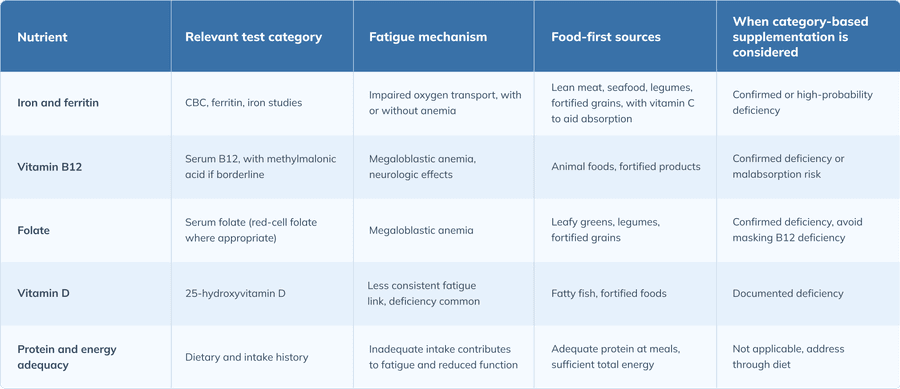
Several nutrient deficiencies can present with symptoms that overlap with those attributed to EBV. Iron deficiency, with or without anemia, can cause fatigue, and correction improves it in some groups, such as menstruating women with low ferritin, though the effect varies by population. (18) Vitamin B12 and folate deficiencies cause anemia and fatigue and share dietary and absorptive risk factors, including low intake in vegan diets and reduced absorption with metformin or proton-pump inhibitors. (14) Low vitamin D is common, and while its link to fatigue is less consistent, deficiency is worth identifying in at-risk patients. (15) Inadequate protein and overall energy intake can also contribute to fatigue and may be easy to miss in a patient following a restrictive self-imposed diet.
Table 2. Nutrient deficiencies to consider with EBV-attributed fatigue
Assessment approach
A nutrition-focused fatigue workup may include a complete blood count (CBC), ferritin and iron studies, vitamin B12, folate, 25-hydroxyvitamin D, and thyroid testing, guided by the history, examination, and risk factors, and interpreted alongside dietary intake and blood-loss history. (11) The aim is to separate deficiency-driven fatigue from post-viral fatigue and to avoid attributing a correctable deficiency to EBV.
Correcting deficiencies through diet first
Diet modification is a foundational approach for many nutrition-related deficiencies, when clinically appropriate. Iron is found in lean meat, seafood, legumes, and fortified grains, with vitamin C improving absorption of non-heme iron. (13) Vitamin B12 comes from animal foods and fortified products, and folate from leafy greens, legumes, and fortified grains. (12) Supplementation is generally reserved for confirmed or strongly suspected deficiency, based on the clinical assessment. Supplement discussion stays on safety, interactions, indication, testing, and clinician oversight: high folic acid intake can mask a B12 deficiency, and iron supplements cause gastrointestinal effects and can reduce zinc absorption. (14)(13) Dose and duration are clinician decisions, and full supplementation protocols sit outside a dietary article.
Conditional dietary tools: matching restriction to indication
Dietary approaches commonly promoted for EBV are better understood as conditional tools. Each may fit a specific clinical indication and works as a bounded, time-limited trial with planned reintroduction, not an open-ended cure attempt.
Framing these as conditional tools, not universal EBV diets
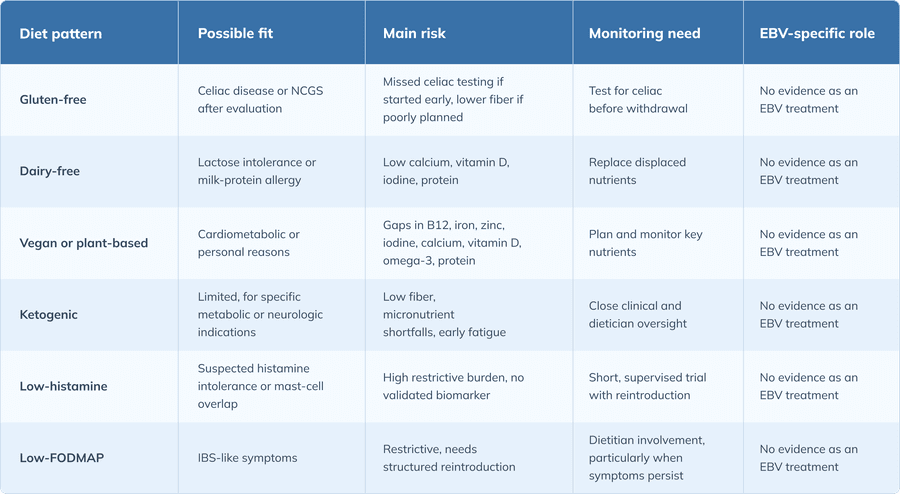
An indication-driven dietary change differs from a generic protocol promoted for EBV. Matching the dietary approach to a documented or strongly suspected indication helps protect nutritional adequacy, and bounding it as a time-limited trial with reintroduction helps prevent unnecessary long-term restriction.
Table 3. Common EBV-related diets as conditional tools
When each may be appropriate and the tradeoffs
A gluten-free diet may be appropriate for celiac disease or non-celiac gluten sensitivity (NCGS) after appropriate evaluation. Celiac testing must come before gluten is removed, because serology and biopsy can turn falsely negative once gluten is withdrawn. (16) Poorly planned gluten-free diets can also lower fiber.
A dairy-free diet may be appropriate for lactose intolerance or milk-protein allergy, with attention to replacing calcium, vitamin D, iodine, and protein.
Plant-based or vegan eating may be appropriate for cardiometabolic or personal reasons and requires planning for vitamin B12, iron, zinc, iodine, calcium, vitamin D, omega-3, and total protein, plus a higher preparation burden when fatigue is severe.
A ketogenic diet warrants caution. It may reduce fiber and plant diversity and can contribute to micronutrient shortfalls and early fatigue, it may also raise energy-availability concerns in patients who are already fatigued, and it has no supporting evidence as an EBV reactivation diet. (4)
A low-histamine or mast-cell-oriented dietary trial may be reasonable in selected patients with suspected histamine intolerance or mast-cell related symptoms and should run as a short, supervised restriction. Histamine intolerance has no validated biomarker and is identified by symptom response to restriction and reintroduction, the restrictive burden is high, and it should not be conflated with EBV activity. (6)
A low-FODMAP (fermentable oligosaccharides, disaccharides, monosaccharides, and polyols) trial may be appropriate for irritable bowel syndrome (IBS)-like symptoms rather than for EBV itself. It reduces symptoms over a 6- to 8-week restriction followed by structured reintroduction, and dietitian involvement helps when symptoms persist. (17)
Risks of unsupervised elimination
Unsupervised elimination carries real costs: nutritional inadequacy, protein and micronutrient gaps, a potential risk of disordered eating, and a quality-of-life and social burden when restriction continues without review. Elimination diets may be appropriate when there is a documented indication and a clinician-supervised reintroduction and adequacy plan is in place.
Practical implementation for fatigue-limited patients
Fatigue limits cooking, which shapes what advice is realistic. Strategies that lower preparation effort while still supporting protein and fiber intake are more useful than an ideal plan a patient cannot execute.
Low-effort eating strategies for energy-limited patients
Batch-prepared and shelf-stable options can help support protein and fiber intake without daily cooking. Simple-assembly meals, built from a few ready components, reduce the cooking burden without defaulting to ultra-processed convenience foods. On the hardest days, sequencing toward the lowest-effort option is reasonable, and food-delivery services or caregiver support may help when function is severely limited.
Fatigue-day meal architecture and backups
A repeatable structure can help on low-energy days: a minimal-prep protein, a ready-to-eat fiber or plant source, an easy energy source, and a source of fluid. A small fatigue-day pantry makes this automatic, stocked with canned beans, canned fish, frozen vegetables, oats, nut butter, and shelf-stable soup.
Foods and patterns to limit, framed as limit rather than prohibition
Some patterns are better framed as limits, not prohibitions. Alcohol is best limited or avoided during active illness, abnormal liver tests, or medication-interaction risk. This is a limit tied to active illness, not a claim that modest intake drives chronic symptoms. Reducing ultra-processed foods and excess added sugar is reasonable with practical substitutions, without framing every processed or convenience food as harmful. Very-low-calorie dieting and unsupervised extreme elimination carry the clearest downside in this group, because inadequate energy, protein, and micronutrients can worsen fatigue and orthostatic symptoms.
Illustrative one-day supportive pattern
As a teaching illustration, a supportive day might run as follows. Breakfast is oats with yogurt, fruit, and nut butter. Lunch is a grain bowl with beans or fish, vegetables, and olive oil. Dinner is a simple protein with a starchy vegetable and greens. A snack might be fruit with nuts or hummus. A fatigue-day shortcut might be canned fish on whole-grain toast with frozen vegetables, or a smoothie with yogurt, fruit, and oats. Portions are individualized, and allergy, histamine, renal, and metabolic restrictions are left to clinician review. The template shows adequacy and pattern, not an individualized plan.
When diet is not enough: red-flag triage, differential diagnosis, and coordinated assessment
Some presentations need evaluation beyond diet. Red flags and a differential workup come before, or alongside, any nutrition plan.
Red flags that warrant prompt evaluation
Several findings warrant prompt evaluation. Constitutional and lymphatic signs include persistent or recurrent fever, drenching night sweats, unintentional weight loss, progressive or persistent lymphadenopathy, severe sore throat with systemic illness, and recurrent infections or clues to immunodeficiency. Hepatic, splenic, and hematologic findings include right or left upper-quadrant pain, hepatosplenomegaly, jaundice, persistent or otherwise unexplained abnormal liver enzymes, anemia, easy bruising, and cytopenias, including severe thrombocytopenia or neutropenia. Neurologic, autonomic, and functional findings include syncope, severe orthostatic intolerance, new focal neurologic deficits, rapidly progressive or severe cognitive decline, debilitating post-exertional worsening, and housebound or bedbound impairment. These features can be seen in CAEBV, EBV-associated hemophagocytic lymphohistiocytosis (HLH), and other serious EBV-associated conditions, all of which warrant diagnostic evaluation and management before nutrition interventions. (9)
The differential not to miss when fatigue is attributed to EBV
Several diagnoses are worth considering before fatigue is attributed to EBV. Common mimics and contributors include anemia, thyroid disease, diabetes or dysglycemia, sleep disorders such as obstructive sleep apnea (OSA), mood and anxiety disorders, medication effects, autoimmune and celiac disease, and other infections. (11) Post-infection conditions include ME/CFS, long COVID and other post-acute infection syndromes, dysautonomia, and post-infectious gastrointestinal syndromes. Serious EBV-associated conditions include CAEBV, EBV-associated HLH, and EBV-associated lymphoproliferative disorders, particularly in immunocompromised hosts. (9)
Lab-review domains within a fatigue workup
Beyond nutrition-focused laboratory testing, a fatigue workup may include CBC with differential, a comprehensive metabolic panel with liver and renal indices, thyroid function, inflammatory markers when indicated, urinalysis, and celiac screening when indicated. (11) EBV-specific testing is most useful when the result will change management. Past antibodies are easy to overinterpret, EBV DNA testing is generally reserved for situations in which it is clinically indicated repeat EBV serology that will not change management is avoidable, and results raising concern for an EBV-associated lymphoproliferative process warrant referral. (3)(9)
Referral, coordination, and individualized assessment
Referral depends on the pattern. Suspected CAEBV or another EBV-associated lymphoproliferative process goes to hematology or infectious disease. (9) Other findings may warrant referral to sleep medicine, endocrinology, mental health, gastroenterology, cardiology, neurology, or a registered dietitian (RD). A personalized plan rests on a few assessment domains: a symptom and timeline review, a diet and access review, and a supplement and medication review by active ingredient. Individualized nutrition assessment paired with an appropriate laboratory workup and monitoring is professional coordination, not a product or service.
Frequently asked questions
How should clinicians interpret a positive EBV IgG, or a so-called reactivation antibody pattern, in a patient presenting with chronic fatigue?
A positive VCA IgG indicates past EBV infection and is expected in most adults, and a reactivation antibody pattern is not specific in an immunocompetent patient with nonspecific fatigue. Interpret it alongside symptoms, timing, examination, and a differential rather than as a cause on its own. (3)
Which fatigue workup should precede attributing a patient's symptoms to chronic EBV?
A history-guided workup that can include a CBC, ferritin and iron studies, vitamin B12, folate, 25-hydroxyvitamin D, and thyroid testing, with further testing directed by findings. (11)
Is there evidence that any specific dietary pattern alters EBV viral load or reactivation?
No dietary pattern has been shown to alter EBV viral load or reactivation. General benefits observed in other populations, such as lower inflammatory markers with a Mediterranean-style dietary pattern, have not been demonstrated as EBV-specific effects. (10)
How can a clinician counsel a patient committed to a restrictive anti-EBV protocol without alienating them?
Validate the symptom burden, explain that nutrition is intended to supports recovery capacity rather than clearing the virus, and redirect toward sustainable, adequate eating and an appropriate workup. Avoid claims that food or supplements cure or suppress EBV.
What findings shift the working diagnosis from post-viral fatigue toward chronic active EBV?
Persistent fever, progressive lymphadenopathy, hepatosplenomegaly, and cytopenias, particularly with demonstrated EBV-infected T or NK cells, shift concern toward CAEBV and warrant specialist referral. (9)
When should a low-histamine, ketogenic, gluten-free, dairy-free, or low-FODMAP trial be considered, and how should it be bounded?
Each fits a specific indication, not EBV itself, and works best as a time-limited trial with planned reintroduction. Celiac testing precedes gluten withdrawal, and both low-FODMAP and low-histamine trials use structured restriction and reintroduction. (16)(17)(6)
How can adequate nutrition be supported when fatigue limits meal preparation, without defaulting to ultra-processed foods or worsening post-exertional malaise?
Use batch-prepared and shelf-stable foods that help support protein and fiber intake simple-assembly meals, and a fatigue-day pantry, and avoid advice that pushes activity beyond a patient's limit.
What supplement-safety questions should be asked before recommending nutrient repletion?
Confirm the indication and any deficiency, review interactions and current medications by active ingredient, and note that high folic acid intake can mask a B12 deficiency. (14)
Which lab abnormalities should redirect the visit from diet planning to medical evaluation?
Cytopenias, markedly abnormal liver enzymes, and other findings that suggest serious disease redirect the visit to medical evaluation rather than diet planning. (11)
Which patients warrant referral to hematology, infectious disease, sleep medicine, endocrinology, gastroenterology, cardiology, neurology, or a registered dietitian?
Suspected CAEBV goes to hematology or infectious disease, and other patterns route to the relevant specialty or to a registered dietitian, depending on the differential. (9)
Clinical application
Return to the patient from the introduction: months of fatigue, brain fog, and intermittent gland swelling, a positive EBV IgG that another clinician read as reactivation, and a restrictive anti-EBV protocol already underway.
The first step is to reset the premise without dismissing her. Her positive IgG is expected in most adults and does not establish active infection, and her symptoms are real and warrant a full evaluation. The goal of the visit is to take the symptoms seriously while moving the explanation away from viral reactivation.
A deficiency assessment and differential evaluation should precede any dietary changes. A history-guided workup that can include a complete blood count, ferritin and iron studies, vitamin B12, folate, 25-hydroxyvitamin D, and thyroid testing is appropriate, read alongside her menstrual and dietary history. (11) The restrictive diet itself may increase the likelihood of inadequate iron, B12, or energy that could be driving the fatigue, so the diet she is already following becomes part of the history rather than the solution.
For supportive nutrition, a Mediterranean-style pattern with adequate protein and energy is a reasonable default, offered as supportive nutrition with general anti-inflammatory health benefits rather than as a treatment for the virus. If a specific indication emerges, such as irritable bowel syndrome-like symptoms, a bounded conditional trial may fit, while the open-ended anti-EBV restriction can be reconsidered.
Red flags remain central throughout the visit. Persistent fever, progressive lymphadenopathy, hepatosplenomegaly, or cytopenias would prompt specialist evaluation versus a nutrition-supported recovery plan for a serious EBV-associated condition. (9) Absent those findings, the plan is to correct what is correctable, keep nutrition in a supporting role, and follow her symptoms over time.
Key Takeaways
- A chronic EBV diet is supportive care, not an antiviral treatment, useful for correcting deficiencies, providing a Mediterranean-style supportive dietary pattern, setting realistic expectations, and protecting the differential.
- A better clinical frame asks what is keeping the patient fatigued, what is correctable, and where nutrition can help. This approach keeps nutrition useful without making antiviral claims.
- Pair individualized nutrition assessment with an appropriate evaluation for a fatigue laboratory workup, use a structured review across nutrition, symptoms, labs, supplements, and red flags, and refer when red flags or alternative diagnoses are suspected.
Ready to start delivering better patient care?
Join 100,000 healthcare providers who rely on Fullscript to dispense top-quality supplements and labs to their patients.