The Top 5 Antioxidants for Your Health and the Best Foods to Get Them


Antioxidants, you’ve seen the word before. It shows up on cereal boxes, juice labels, and supplement bottles. The word gets used so often that it's easy to lose track of what antioxidants do and which ones matter most.
This guide explains how antioxidants protect your cells and covers five that your body relies on most. You'll also learn which foods are richest in antioxidants, how cooking changes them, when supplements can cause harm, and which lab tests can check your levels.
Key takeaways:
- Antioxidants protect your cells from free radicals, which are unstable molecules that can damage DNA, fats, and proteins.
- Glutathione, CoQ10, vitamin E, vitamin C, and selenium are five of the body's most important antioxidants.
- Walnuts, dark chocolate, pecans, berries, and artichokes are among the most antioxidant-rich common foods.
- Frying lowers antioxidants in leafy greens, while boiling and steaming can keep or even raise them in some greens.
- High-dose antioxidant supplements aren't always safe, and some have been linked to harm in certain groups.
- Lab tests can measure specific antioxidant nutrients and signs of oxidative damage to help guide a personal plan.

Health is a journey. Find your guide.
Fullscript Connect helps you find a healthcare provider that partners with you — from where you are now to where you want to be. Easily explore profiles and pricing, find the right fit, and book today.
What are antioxidants?
Antioxidants are compounds that protect your cells from free radicals. Free radicals are unstable molecules that your body makes during normal processes, like turning food into energy. You're also exposed to them through air pollution, cigarette smoke, and radiation. (10)
Free radicals are missing an electron, so they try to take one from nearby molecules. That can damage the DNA, fats, and proteins inside your cells. Antioxidants give up an electron without becoming unstable themselves, which stops the chain of damage. (10)
When free radicals outnumber the antioxidants available to handle them, the result is called oxidative stress. Researchers are studying how oxidative stress over time may affect long-term health. (10)
Free radicals aren't all bad, though. Your body uses small amounts of them to send signals between cells and to fight germs. The goal is balance, not getting rid of free radicals completely. (10)
How do antioxidants work in the body?
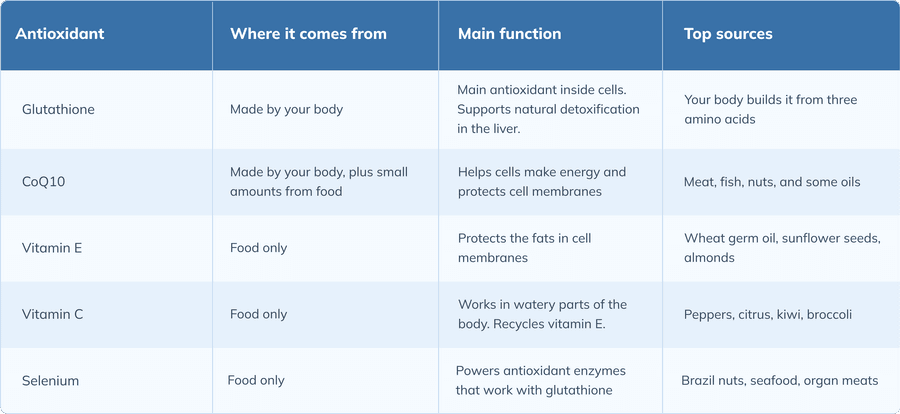
Your body gets antioxidants from two places. It makes some on its own, like glutathione and coenzyme Q10 (CoQ10). Others, like vitamin C, vitamin E, and selenium, have to come from food. (5)(7)(8)(11)
These antioxidants don't work alone. Vitamin C helps recycle used vitamin E back into its active form. (8) Selenium is part of enzymes called glutathione peroxidases, which work with glutathione to break down harmful molecules. (7) Because of this teamwork, eating a variety of antioxidant-rich foods tends to make more sense than focusing on just one.
The top 5 antioxidants for your health
Many compounds act as antioxidants. These five stand out because of how much your body depends on them.
1. Glutathione
Glutathione is often called the body's master antioxidant. Your cells build it from three amino acids (protein building blocks): glutamate, cysteine, and glycine. Of these, cysteine is usually in shortest supply. That makes it the main factor that limits how much glutathione your body can make. Glutathione is found in nearly every cell. It's especially important in the liver, where it supports the body's natural detoxification processes. (11)
Glutathione supplements were long thought to break down in the gut before the body could absorb them. A six-month trial in 54 adults challenged that idea. People who took oral glutathione every day had higher glutathione levels in their blood and other cells. Levels returned to normal one month after they stopped. (13) This was one small study, and absorption may vary from person to person, so more research is needed.
2. Coenzyme Q10
CoQ10 is an antioxidant your body makes on its own. The highest CoQ10 levels are in the heart, liver, kidneys, and pancreas. (5) CoQ10 helps cells make energy and protects their outer layers from free radical damage. (12)
You can also get CoQ10 from food. Meat and fish are among the richest sources, along with nuts and some oils. Even so, most people get only about 3–6 mg per day from their diet. (12)
Research on CoQ10 supplements is still limited, and results so far are mixed. CoQ10 may also interact with the blood thinner warfarin and with insulin. Talk with your provider before taking it if you use either medication. (5)
3. Vitamin E
Vitamin E is a fat-soluble vitamin that comes in eight forms. Alpha-tocopherol is the only form your body uses to meet its needs. As an antioxidant, vitamin E stops the chain reaction that happens when free radicals attack the fats in your cell membranes. It also supports the immune system and helps blood vessels widen. (9)
Adults need 15 mg of vitamin E per day. Good sources include wheat germ oil, sunflower seeds, almonds, hazelnuts, and peanuts. Scientists once hoped vitamin E supplements would prevent heart disease, but most large clinical trials haven't found that benefit. (9)
4. Vitamin C
Your body can't make vitamin C, so you need to get it from food. Because it dissolves in water, vitamin C protects the watery parts of your body, both inside and outside cells. It also recycles other antioxidants, including vitamin E. (8)
Women need 75 mg of vitamin C per day, and men need 90 mg. People who smoke need an extra 35 mg. Red and green peppers, citrus fruits, kiwi, broccoli, and strawberries are all rich sources. (8)
5. Selenium
Selenium is a mineral your body needs in small amounts. It's part of more than two dozen proteins called selenoproteins. Some of these, the glutathione peroxidases, team up with glutathione to protect cells from damage. (7)
Adults need 55 mcg of selenium per day. A single Brazil nut can contain 68–91 mcg, so one nut can cover more than a full day's needs. Seafood and organ meats are also good sources. Selenium is important for thyroid health, reproduction, and making DNA, but too much can be harmful. Adults should stay under 400 mcg per day from all sources. (6)
The best antioxidant foods
Plant foods carry far more antioxidants than animal foods. A large study tested more than 3,100 foods using the ferric reducing ability of plasma (FRAP) test. This test measures how well a food neutralizes free radicals. Berries, fruits, nuts, chocolate, and vegetables were among the common foods with the highest scores. (1)
Dark chocolate
Cocoa is rich in flavanols, a type of plant antioxidant. (14) The more cocoa a chocolate contains, the more antioxidants it has. Chocolate with 70–99% cocoa averaged about six times the antioxidants of chocolate with 24–30% cocoa. (1)
A review of short studies, lasting 2–18 weeks, found that flavanol-rich cocoa products had a small effect on blood pressure in mostly healthy adults. On average, readings were about 2 mmHg lower. No studies have tested long-term daily use. (14) Dark chocolate also contains sugar and calories. It works best as a small treat, not a health food.
Walnuts and pecans
Nuts are among the richest common sources of antioxidants, especially when their thin, papery skin is left on. Walnuts averaged 21.9 mmol per 100 g, and pecans averaged 8.5 mmol. Walnuts and several other nuts scored higher with their skin intact than without it. (1)
Blueberries and strawberries
Berries are one of the most antioxidant-rich food groups. (1) Blueberries get their deep color from anthocyanins, a type of plant antioxidant. (2) In one six-month trial, 115 adults with metabolic syndrome ate either blueberry powder or a placebo powder. Those who had the equivalent of one cup of blueberries a day showed better blood vessel function and less artery stiffness than the placebo group. Half a cup a day made no difference. Larger studies are needed to know whether this lowers heart disease risk. (2)
Strawberries are also a great source of vitamin C. Half a cup of fresh strawberries provides about half of what adult males, and two-thirds of what adult females, need in a day. (8)
Artichokes
Artichokes are one of the most antioxidant-rich vegetables in the Antioxidant Food Table. They averaged 3.5 mmol per 100 g, about seven times more than cooked broccoli. (1)
Does cooking affect antioxidant levels?
Yes, and the cooking method matters. A 2018 study tested frying, boiling, and steaming on six types of leafy herbs. Frying lowered antioxidants in every green tested. Boiling and steaming had mixed results, and in some greens they raised antioxidant levels compared with raw leaves. (3)
The study looked at greens common in Sri Lanka, so results may differ for other vegetables. Still, steaming or boiling leafy greens is generally a better choice than frying. (3)
Are antioxidant supplements safe?
Antioxidants from food are safe for most people. High-dose supplements are a different story. Large studies haven't shown that antioxidant supplements prevent disease, and some have found harm. (4) Known risks include:
- Beta-carotene: High doses raised the risk of lung cancer in people who smoke. (4)
- Vitamin E: High doses may raise the risk of prostate cancer and bleeding. (4)
- Medication interactions: Some antioxidant supplements can interact with medications, including blood thinners. (4)(5)
If you're being treated for cancer, talk with your care team before taking antioxidant supplements. They may interfere with chemotherapy or other cancer treatments. (4)
The same goes for other health situations. Talk with your provider before taking any antioxidant supplement if you're pregnant or breastfeeding, have kidney or liver disease, smoke, or take any prescription medication.
This is where testing helps. Checking your levels with a provider can show whether you need more of a specific nutrient or whether food alone is enough.
How to test antioxidant levels
No single test measures all of your antioxidants. Instead, providers use two main types of tests.
Nutrient level testing
Micronutrient panels measure specific vitamins, minerals, and antioxidants in your blood. Many include vitamin C, vitamin E, selenium, CoQ10, and glutathione. Results can show whether you're low in a nutrient and whether diet changes or supplements might help.
Oxidative stress markers
Some tests look at the damage free radicals leave behind. One common marker is 8-hydroxy-2'-deoxyguanosine (8-OHdG). It forms when free radicals damage DNA, and it can be measured in urine. Researchers use 8-OHdG to estimate DNA damage after exposure to tobacco smoke, heavy metals, and asbestos. (15)
Your provider can help you choose the right test and explain what your results mean. Many providers order these tests through Fullscript Labs.
Frequently asked questions (FAQs)
What is the most powerful antioxidant?
Glutathione is often called the body's master antioxidant because it works in nearly every cell and supports the liver's natural detoxification processes. (11) Still, no single antioxidant does every job. They work as a team, and vitamin C, for example, helps recycle vitamin E. (8)
What foods are highest in antioxidants?
Among common foods, walnuts, dark chocolate with at least 70% cocoa, pecans, sunflower seeds, berries, and artichokes rank high. Spices and dried herbs score even higher, though people eat them in small amounts. (1)
Is it better to get antioxidants from food or supplements?
For most people, food is the better choice. Antioxidant supplements haven't been shown to prevent disease in large studies, and high doses of some can cause harm. (4) A provider can help you decide if a supplement makes sense for you.
Can you take too many antioxidants?
Yes. For example, vitamin E supplements above 1,000 mg a day can raise the risk of bleeding. (9) Too much selenium can cause garlic-smelling breath, a metallic taste, and hair and nail loss. (6)
Does cooking destroy antioxidants?
It depends on the method. In one study, frying lowered antioxidants in every leafy green herb tested, while boiling and steaming sometimes kept or raised them. (3)
How do I know if my antioxidant levels are low?
There's no single symptom. A micronutrient test can measure specific antioxidant nutrients, and tests for markers like 8-OHdG can show signs of oxidative damage. (15) Talk with your provider about which test fits your health goals.
The bottom line
Antioxidants help protect your cells from free radical damage, and your body relies on a mix of them. It makes glutathione and CoQ10 on its own and gets vitamin C, vitamin E, and selenium from food. Nuts, dark chocolate, berries, artichokes, and colorful produce are some of the richest sources. For most people, a varied diet is the best way to get enough. If you're thinking about supplements, talk with your provider first and consider testing to see what your body actually needs.
Health is a journey. Find your guide.
Fullscript Connect helps you find a healthcare provider that partners with you — from where you are now to where you want to be. Easily explore profiles and pricing, find the right fit, and book today.