High Systolic, Low Diastolic Blood Pressure: What it Means and What to Do


Blood pressure is the force of blood pushing against the walls of your arteries as your heart pumps. A reading has two numbers. The top number (systolic) is the pressure when your heart beats. The bottom number (diastolic) is the pressure when your heart rests between beats. Both are measured in millimeters of mercury (mm Hg).
Nearly half of U.S. adults, or about 120 million people, have high blood pressure. It is more common in men and in Black adults, and rates are higher in the southeastern United States. Because it often has no symptoms, many people do not know they have it. (4)
But what does it mean when only your top number is high, and your bottom number is normal or low? This article explains this pattern, what causes it, how it is diagnosed, and how you and your provider can manage it.
Key takeaways:
- A high top number with a normal or low bottom number is called isolated systolic hypertension (ISH). It is the most common type of high blood pressure after age 50.
- The main cause is stiffening of the large arteries. Other causes include an overactive thyroid, anemia, and a leaky heart valve.
- ISH is linked to a higher risk of heart disease, stroke, and kidney problems. It is becoming more common in young adults, too.
- Diagnosis starts with repeat readings at home or over 24 hours, plus basic lab tests to look for an underlying cause.
- Treatment includes addressing the cause, lifestyle changes, and medicine if needed. Your provider will aim to lower the top number without pushing the bottom number too low.
- A reading of 180/120 or higher with symptoms like chest pain or trouble speaking is an emergency.

Health is a journey. Find your guide.
Fullscript Connect helps you find a healthcare provider that partners with you — from where you are now to where you want to be. Easily explore profiles and pricing, find the right fit, and book today.
Understanding blood pressure readings
The American Heart Association groups blood pressure categories for adults like this:
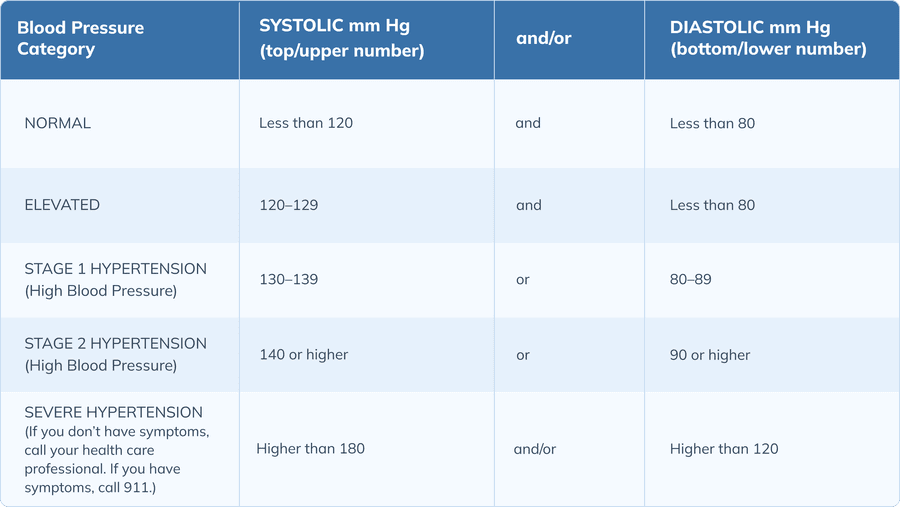
Notice the word "or" in the high blood pressure rows. Only one number needs to be high for you to have high blood pressure. (2)
When high blood pressure is an emergency
Most of the time, high blood pressure causes no symptoms. But when it climbs to 180/120 or higher, it can harm your organs. Signs that you need emergency care and to call 911 include:
- Chest pain
- Shortness of breath
- Back pain
- Numbness or weakness
- Changes in vision
- Trouble speaking (2)
If your reading is higher than 180/120 but you have no symptoms, wait one minute and check again. If it is still that high, contact your healthcare provider right away. (2)
What is high systolic, low diastolic blood pressure?
When your top number is high, but your bottom number is normal or low, it is called isolated systolic hypertension (ISH). Researchers often define it as a top number of 130 mm Hg or higher with a bottom number below 80 mm Hg. (18)
ISH is the most common type of high blood pressure in people over 50. In one large U.S. study, about 80% of people aged 50 and older with untreated or poorly controlled high blood pressure had this pattern. (8)
In some people with ISH, the bottom number is lower than usual. This can make treatment difficult, because blood pressure medicine lowers both numbers. Guidelines in Europe suggest keeping the diastolic blood pressure above a safety margin of 70 mm Hg or higher during treatment, so enough blood reaches the heart and other organs. (12)
What is pulse pressure?
Pulse pressure is the gap between your two blood pressure numbers. To find it, subtract the bottom number from the top number. (18) For example, if your blood pressure is 150/65 mm Hg, then your pulse pressure is 150 − 65 = 85.
A typical pulse pressure is about 40, based on a “normal” blood pressure reading of 120/80 mm Hg. A high systolic, low diastolic reading always creates a wider gap, or a wide pulse pressure. (18)
Root causes of high systolic, low diastolic blood pressure
Stiff arteries
The most common cause is age-related stiffening of the large arteries. Healthy arteries stretch with each heartbeat, then spring back. Over time, arteries may become stiffer and less elastic. (18)
A stiff artery cannot absorb each heartbeat as well, so the top number goes up. It also cannot spring back as well, so the bottom number goes down. This is why both numbers rise together until about age 50–55. After that, the top number keeps climbing while the bottom number levels off or falls. (8)(18)
Other medical conditions
Some health conditions make the heart pump harder or let blood flow back too fast, which can also raise the top number and lower the bottom number. According to a clinical review of wide pulse pressure, they include conditions such as a leaky heart valve and an overactive thyroid. (18)
Known secondary causes of isolated systolic hypertension include:
- Anemia: A low red blood cell count
- Hyperthyroidism: An overactive thyroid, which speeds up the heart
- Aortic insufficiency: A leaky aortic valve that lets blood flow back into the heart after each beat
- Paget disease of bone: A bone condition that can greatly increase blood flow through affected bones (16)
With aortic insufficiency, blood flows backward through the valve, which can lead to heart failure over time if it is not treated. (15) With Paget disease of bone, extra blood flow to the bones can make the heart work harder in rare, severe cases. (3)
These causes are less common than stiff arteries. But they matter, because they often need their own treatment.
Risk factors
Some risk factors are things you cannot change, like your age, family history, or race. Others are things you can change, like your diet and activity level.
Common risk factors for high blood pressure include:
- Diabetes
- A diet high in sodium (salt)
- Not getting enough physical activity
- Obesity
- Drinking too much alcohol
- Using tobacco
- Older age
- Family history of high blood pressure (5)
For ISH, the main risk factor is older age, because arteries get stiffer over time. (8)
Isolated systolic hypertension in young adults
ISH is most common in older adults, but it is becoming more common in young adults. In a U.S. study of adults aged 18–39, ISH was more common than systolic/diastolic high blood pressure (where both numbers are high). Rates of ISH in this age group rose between the early 1990s and early 2000s, especially in men. (9)
In this study, young adults were more likely to have ISH if they:
- Were male
- Had obesity
- Currently smoked
- Had less than a high school education (9)
Some people once thought ISH in young adults was harmless. But a study that followed young and middle-aged adults for 31 years found that those with ISH had a higher risk of dying from cardiovascular disease. The risk was 23% higher in men and 55% higher in women, compared with people who had normal blood pressure. (20)
Health effects of high systolic, low diastolic blood pressure
Any type of high blood pressure needs care from a provider. Large studies link ISH and wide pulse pressure to:
- Stroke: In a study of older adults with ISH, each 10-point rise in pulse pressure was tied to an 11% higher risk of stroke. (18)
- Death from any cause: In that same study, each 10-point rise in pulse pressure was tied to a 16% higher risk of death. (18)
- Heart disease: In a separate long-term study, each 10-point rise in pulse pressure was linked to a 23% higher risk of coronary artery disease. (18)
- Kidney problems: In older adults with ISH, a higher systolic number has been found to be a strong predictor of declining kidney function. (21)
It’s important to recognize that these studies show a link, not proof that pulse pressure alone causes these problems.
A very low bottom number can carry its own risks. The heart gets most of its own blood supply between beats, and if the bottom number drops too low, less blood may reach the heart. Research on this is mixed, so providers often set goals based on the unique case of an individual. (12)
Diagnosis and lab tests
Confirming your blood pressure
A diagnosis starts with your health history, family history, and any symptoms. Your provider will then take several readings. Blood pressure changes during the day and can jump at the clinic, so one high reading is not enough.
Guidelines recommend confirming high readings outside the clinic, either with a home monitor or a monitor you wear for 24 hours. (11) If you check at home, the American Heart Association offers these home blood pressure monitoring tips:
- Use a validated monitor with a cuff that goes on your upper arm
- Make sure the cuff fits your arm
- Avoid caffeine, smoking, and exercise for 30 minutes before you measure
- Sit quietly for five minutes with your back supported and feet flat
- Rest your arm on a table at heart level, with the cuff on bare skin
- Take two readings one minute apart, and write down both (1)
Lab tests
Lab tests can help find a root cause and check how your body is handling high blood pressure. The 2025 high blood pressure guideline recommends these basic tests for all adults with high blood pressure:
- Complete blood count (CBC): Checks for anemia
- Thyroid-stimulating hormone (TSH): Screens thyroid function
- Fasting blood glucose or hemoglobin A1c: Checks for diabetes
- Lipid panel: Measures cholesterol and triglycerides
- Kidney function tests: Includes creatinine and estimated glomerular filtration rate (eGFR)
- Electrolytes: Measures sodium, potassium, and calcium
- Urinalysis: Checks for protein or sugar in the urine
- Urine albumin-to-creatinine ratio (UACR): Checks for early kidney damage.
- Electrocardiogram (ECG): Checks your heart's rhythm and electrical activity (11)
Additional testing
Sometimes your provider needs a closer look at your heart and blood vessels. Other tests may include:
- An echocardiogram, an ultrasound of the heart that can show valve problems like aortic insufficiency (14)
- A cardiac stress test, which shows how your heart responds to activity (10)
- A carotid artery ultrasound, which checks blood flow through the large arteries in your neck (6)
- An ankle-brachial index (ABI), which compares blood pressure in your ankles and arms to check for blocked arteries in the legs (13)
Treatment and management
The goal is to bring the top number down without pushing the bottom number too low. This takes a plan built around you. Older adults, especially those who are frail, may need goals and treatments adjusted to their overall health. (12)
Address underlying causes
The first step is to find and treat any underlying cause, like anemia, an overactive thyroid, or a heart valve problem. For example, ISH caused by an overactive thyroid can improve once the thyroid problem is treated. (16)
Know your blood pressure goal
The 2025 high blood pressure guideline sets a goal of less than 130/80 for most adults. (11)
If you have stage 1 high blood pressure and a lower overall risk, you will usually start with lifestyle changes for 3–6 months. If your average reading is still 130/80 or higher after that, medicine is recommended. People with heart disease, a past stroke, diabetes, chronic kidney disease, or a higher overall risk usually start medicine right away. (11)
Lifestyle changes
Lifestyle changes are a strong first step when blood pressure is not dangerously high. Guidelines recommend:
- Eating less sodium
- Getting more potassium from foods like fruits, vegetables, and beans
- Following a heart-healthy eating plan
- Exercising regularly
- Losing weight, if needed
- Drinking less alcohol
- Quitting smoking
- Getting high-quality sleep
- Reducing stress (11)
Eat for your heart
The DASH eating plan focuses on vegetables, fruits, whole grains, low-fat dairy, beans, nuts, fish, and poultry. In the DASH-Sodium trial, people with high blood pressure who followed the DASH plan and ate less sodium for 30 days lowered their top number by an average of 11.5 mm Hg, compared with a typical high-sodium diet. (17)
Move your body
A large review of 270 exercise trials found that walking, running, cycling, strength training, and interval training all lowered blood pressure. Isometric exercises, where you hold a muscle tight without moving, like a wall sit, worked best. They lowered the top number by about 8 mm Hg on average. (7) Ask your provider which types of exercise are safe for you.
Supplements
Some nutrients play a role in heart and blood vessel health, and researchers continue to study them:
- Magnesium: Researchers have pooled results from 34 magnesium trials that looked at blood pressure in adults. (22)
- Omega-3 fatty acids: EPA and DHA, the omega-3s found in fatty fish and fish oil, have been studied in a review of 71 omega-3 trials. (23)
Supplements are not a replacement for lifestyle changes or any medicine your provider prescribes. Talk with your provider before starting any supplement, especially if you take blood pressure medicine or blood thinners, or have kidney disease. This also applies to salt substitutes that contain potassium. Your provider can help you decide whether a high-quality supplement makes sense for you.
Medicine
If your blood pressure is very high, or lifestyle changes are not enough, your provider may recommend medicine. The choice depends on your health history, other conditions, and your bottom number.
The main types of medicine used first for high blood pressure include:
- Thiazide diuretics (water pills)
- Angiotensin-converting enzyme (ACE) inhibitors
- Angiotensin II receptor blockers (ARBs)
- Calcium channel blockers (19)
Some research suggests thiazide diuretics may narrow pulse pressure more than beta-blockers (another type of medication that can lower blood pressure). (18) Some people may need more than one medicine, and these are often combined in a single pill. (11)
Do not stop or change your medicine without talking to your provider first.
Monitoring
Regular checkups help make sure your treatment is working and your blood pressure does not drop too low. After a medicine change, guidelines suggest follow-up visits about once a month until your blood pressure is under control. (19)
Between visits, keep checking your blood pressure at home. Call your provider if you notice:
- Dizziness or lightheadedness, especially when you stand up
- Fainting
- Readings that are much higher or lower than usual
Frequently asked questions (FAQs)
Is high systolic and low diastolic blood pressure dangerous?
It can be. A high top number with a wide gap between your two numbers is linked to a higher risk of stroke, heart disease, kidney problems, and death. (18)(21) A very low bottom number may also reduce blood flow to the heart. (12) The good news is that it can be managed with a plan from your provider.
What causes high systolic and low diastolic blood pressure?
The most common cause is stiffening of the large arteries with age. (18) Other causes include anemia, an overactive thyroid, a leaky aortic valve, and Paget disease of bone. (16)
What is a normal pulse pressure?
A typical pulse pressure is about 40, based on a reading of 120/80 mm Hg. (18) To find yours, subtract your bottom blood pressure number from your top blood pressure number.
Can young people have isolated systolic hypertension?
Yes. ISH is becoming more common in adults under 40, especially men. (9) Young adults with ISH have a higher long-term risk of dying from heart disease. (20)
Can I lower my systolic pressure without medicine?
Many people can. The DASH eating plan, reducing dietary sodium, and regular exercise all lower the top number. (7)(17) If your blood pressure stays high or your overall risk is high, your provider may recommend medicine. (11)
When is high blood pressure an emergency?
A reading of 180/120 mm Hg or higher with chest pain, shortness of breath, back pain, numbness, weakness, vision changes, or trouble speaking is an emergency. Call 911 right away. (2)
The bottom line
A high systolic, low diastolic blood pressure reading usually means your large arteries are getting stiffer. It can also point to another health condition, like an overactive thyroid or a heart valve problem. It is linked to a higher risk of heart disease, stroke, and kidney problems at any age, so it is worth taking seriously even if you feel fine.
Start by checking your blood pressure at home and sharing your readings with your provider. Together, you can look for a root cause and build a plan that lowers your top number safely.
Health is a journey. Find your guide.
Fullscript Connect helps you find a healthcare provider that partners with you — from where you are now to where you want to be. Easily explore profiles and pricing, find the right fit, and book today.