Using The NutrEval Test to Identify Nutrient Deficiencies and Functional Imbalances

Fatigue that lingers, brain fog that won’t lift, and digestive issues with no clear cause. These are all familiar complaints, and they often come from patients who have tried everything without relief. For providers, it can be frustrating to feel like you're missing a piece of the puzzle.
NutrEval by Genova Diagnostics offers a more comprehensive approach. This article presents a clinical guide to NutrEval testing, what it measures, how to interpret its results, when to use it, how it compares to other tools, and how to implement it within clinical workflows.
The information in this article is intended for healthcare providers for educational purposes only, and is not a substitute for informed medical, legal, or financial advice. Providers should rely on their own professional training and judgement, and consult appropriate legal, financial, or clinical experts when necessary.
Ready to start delivering better patient care?
Join 100,000 healthcare providers who rely on Fullscript to dispense top-quality supplements and labs to their patients.
Clinical context and platform overview
A growing number of patients present with chronic, nonspecific symptoms that don’t respond to conventional approaches. For providers managing complex cases, functional testing can offer deeper insight into biochemical imbalances that might otherwise go undetected.
Why NutrEval? Functional testing in modern clinical practice
Standard nutrient panels report serum concentrations of selected vitamins and minerals, offering a snapshot of circulating nutrient levels at a single point in time.
In contrast, functional testing methods, such as NutrEval, assess how nutrients function at a cellular level. By examining metabolic intermediates, enzyme cofactors, and oxidative stress markers, healthcare providers gain a more comprehensive understanding of nutrient utilization.
This approach is particularly valuable for:
- Patients with multisystem complaints or unclear diagnoses
- Individuals with long-term fatigue, cognitive dysfunction, or digestive issues
- Clients undergoing integrative care for chronic conditions
What does NutrEval measure? Overview of biomarkers
NutrEval includes over 125 biomarkers, pulling from plasma, RBCs, and urine. This multi-specimen approach captures a wide range of metabolic and nutritional indicators, offering a systems-level perspective.
Key functional areas assessed include:
- Vitamins and minerals (e.g., B-complex, magnesium, zinc, selenium)
- Amino acid profiles (essential and non-essential)
- Essential fatty acids (including omega-3 and omega-6 balance)
- Markers of oxidative stress (like lipid peroxides and 8-OHdG)
- Detoxification capacity (including glutathione status and phase I/II metabolites)
These data points aren’t just static values. They reflect the function, sufficiency, and interdependency of nutrients within broader metabolic networks.
Sample types, logistics, and turnaround times
NutrEval testing requires multiple sample types to ensure broad functional coverage:
- Blood samples: Drawn in a fasting state
- Urine sample: First-morning void is recommended
Shipping protocols are well-defined, with most kits including detailed packaging instructions and prepaid return labels. Ensuring proper collection and storage conditions helps maintain sample integrity.
Turnaround time can vary from 5 to 21 days. This range depends on lab volume, assay complexity, and whether genetic testing was included. It's helpful to set patient expectations early and plan follow-ups accordingly.
NutrEval vs. Metabolomix+: A structured comparison
Both NutrEval and Metabolomix+ (another functional test from Genova Diagnostics) offer functional nutrition assessments. However, there are key differences in their scope, structure, and clinical utility.
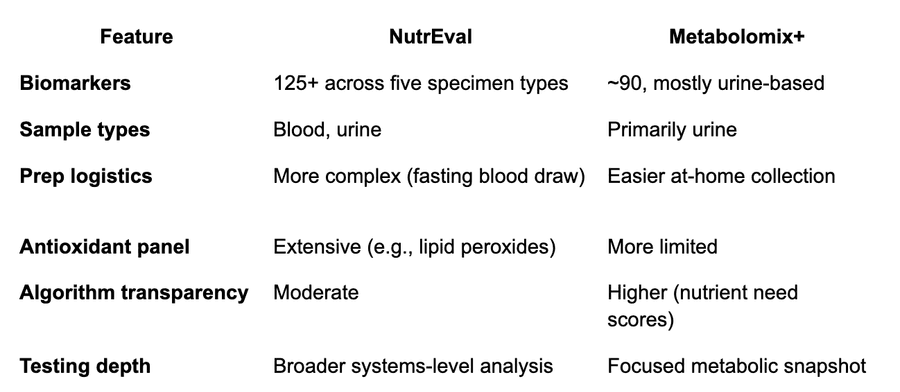
While NutrEval offers more depth and diversity in biomarker data, Metabolomix+ may be preferred when ease of collection is a primary concern or when screening is the initial goal.
Biomarker domains and clinical interpretation
Understanding the diverse biomarkers within NutrEval allows providers to extract clinically meaningful patterns that support individualized care planning. Each domain provides insight into specific physiological systems and potential nutrient-related dysfunction.
Organic acids
Organic acid testing offers a powerful view into intermediary metabolism and cellular activity. NutrEval categorizes these biomarkers into several functional groups:
- Mitochondrial energy metabolism: Includes lactate, pyruvate, and citric acid cycle intermediates like citrate, succinate, and malate, which can reveal blocks in ATP production or cofactor insufficiencies (e.g., B vitamins, magnesium).
- Neurotransmitter metabolites: Markers such as kynurenate and quinolinate reflect tryptophan metabolism and can suggest imbalances in serotonin and NAD synthesis.
- Microbial overgrowth: Elevated arabinose or D-lactate can indicate yeast or bacterial overgrowth affecting GI and neurological symptoms.
- Detoxification intermediates: Pyroglutamate and orotate, among others, can signal impaired glutathione recycling or urea cycle dysfunction.
- Oxalate metabolism: Oxalate levels may relate to dietary intake, gut microbiome imbalances, or vitamin B6 status.
These markers often point toward functional impairments before overt pathology develops.
Amino acids (plasma vs. urine)
Amino acid analysis provides insight into protein metabolism, neurotransmitter synthesis, detox pathways, and immune function.
- Plasma amino acids provide information on circulating amino acid levels within the bloodstream and are commonly used to assess overall amino acid balance.
- Urine amino acids reflect amino acids excreted through renal pathways and can offer complementary insight into how amino acids are processed and eliminated.
Fatty acid profiles
RBC fatty acid analysis offers a long-term view of omega-3 and omega-6 status, reflecting membrane health and inflammatory potential. Key ratios, such as Omega-6/Omega-3, AA/EPA, and the Omega-3 Index, help assess dietary patterns and guide clinical decisions related to inflammation and chronic disease risk.
Oxidative stress and antioxidant capacity
This section of NutrEval evaluates both the damage caused by oxidative stress and the body’s capacity to defend against it.
- Reserve markers: Levels of glutathione (reduced and oxidized) and CoQ10 can indicate antioxidant sufficiency and mitochondrial health.
- Damage markers: Lipid peroxides and 8-hydroxy-2'-deoxyguanosine (8-OHdG) are indicators of oxidative damage to cell membranes and DNA, respectively.
These metrics are useful when working with patients with chronic inflammation, neurodegenerative risk, or high toxicant exposure.
Nutrient and toxic elements
Mineral balance and heavy metal burden are critical in functional medicine assessments.
- Nutrient elements: Includes essential minerals such as zinc, copper, magnesium, and selenium, which play roles in immune function, antioxidant defense, and neurotransmitter activity.
- Toxic elements: Lead, mercury, arsenic, and cadmium are reported when levels are detectable. These can interfere with nutrient absorption and enzyme function.
Interpretation must consider environmental exposures, detox capacity, and recent supplementation history.
How NutrEval scores functional needs: The algorithm explained
NutrEval includes a proprietary algorithm that synthesizes results into functional need scores for nutrients such as B6, magnesium, and antioxidants. This is based on:
- Published nutrient functions and biochemical pathways
- Peer-reviewed clinical research
- Institute of Medicine (IOM) nutrient requirement data
The algorithm clusters relevant biomarkers for each nutrient (e.g., methylmalonic acid, homocysteine, and formiminoglutamate for B12 and folate status) to provide a more integrated view of functional need rather than isolated levels.
Interpretation caveats: What providers must consider
Several factors can influence NutrEval results, and accurate interpretation requires clinical context.
- Supplement use: Recent intake of vitamins, amino acids, or antioxidants may skew results, particularly in organic acids and antioxidant markers.
- Dietary patterns: A nutrient-dense or restrictive diet prior to testing can alter biomarker output.
- Hydration status: Urinary markers can be diluted or concentrated based on fluid intake, so fluid restriction guidelines should be followed.
- Timing and baseline variability: Results are best interpreted as part of a broader clinical picture, ideally with pre-test instructions clearly followed.
Patient preparation and sample integrity
Proper patient preparation is key to obtaining accurate and clinically useful NutrEval results. Sample quality and timing directly impact biomarker validity, so clear instructions and adherence strategies are essential.
Pre-test preparation checklist
To minimize false elevations or suppressions in nutrient markers, patients should follow specific preparation guidelines:
- Discontinue supplements and fortified foods at least 4 to 5 days before collection, including multivitamins, individual nutrients, and energy drinks.
- Limit fluid intake to approximately 48 ounces in the 24 hours prior to urine collection to prevent dilution.
- Fast overnight, ideally for 10–12 hours, before the blood draw and urine collection.
- Avoid brushing teeth or using mouthwash before collecting the first-morning urine to reduce contamination.
Providing a printed or digital checklist improves compliance and reduces collection errors.
Sample collection tips and timing
Coordinating the timing and handling of blood and urine samples ensures data reliability:
- Urine collection should be from the first void of the morning. If the patient wakes early and urinates, they can collect again at their usual waking time and combine the samples.
- Blood draw should be done the same day, ideally after the urine sample, to maintain consistency across biomarkers.
- Labeling and packaging: All tubes must be clearly labeled with name, date, and time of collection. Urine samples may need freezing depending on transit time.
- Shipping protocols: Samples should be packed with cold packs (not dry ice unless specified) and shipped as soon as possible to prevent degradation.
Patients should be walked through each step during the ordering process or provided with a visual guide.
Common errors and how to avoid them
Several frequent missteps can compromise results:
- Non-fasting samples may distort glucose, insulin, and organic acid readings.
- Overhydration dilutes urine-based biomarkers, leading to underestimation.
- Recent supplement intake can elevate vitamin and amino acid levels, creating false reassurance.
- Delays in freezing or shipping allow for microbial degradation of sensitive markers.
Providers can prevent these issues by:
- Reviewing preparation guidelines verbally and in writing
- Using pre-test checklists
- Following up before test day to confirm patient readiness.
Clinical interpretation and application pathways
Once the results are in, translating them into actionable care pathways is critical. NutrEval’s scoring system and domain flags help streamline interpretation and prioritize interventions.
Functional imbalance scoring and domain flags
NutrEval highlights imbalances in core physiological systems by integrating multiple biomarkers into functional clusters:
- Methylation: Assesses folate, B12, and methionine metabolism
- Mitochondrial stress: Reflects energy production issues
- Detoxification: Identifies phase I/II bottlenecks and glutathione needs
- Inflammation and oxidative stress: Capture damage markers and antioxidant reserves
- Fatty acid imbalance: Highlights pro- vs. anti-inflammatory lipid profiles
Color-coded flags and scoring gradients help providers quickly identify areas of highest priority.
Nutrient need overview and supplement strategy
Each nutrient is assigned a need score categorized as high, borderline, or minimal based on biomarker patterns.
Pediatric adjustments require caution, considering age, weight, and metabolic demands. Use evidence-based pediatric ranges when tailoring protocols.
Specialty applications
NutrEval’s depth makes it especially useful in integrative specialty care:
- Psychiatry: Identifies amino acid imbalances, neurotransmitter precursors, and B-vitamin dependencies that may affect mood, cognition, and focus
- Sports medicine and rehab: Guides recovery support with insights into carnitine status, oxidative stress burden, and energy metabolism
These data support targeted nutritional protocols in complex or high-demand clinical environments.
Follow-up and retesting intervals
Routine retesting is typically recommended every 3 to 4 months, especially when significant deficiencies or imbalances are found. Adjust retesting frequency based on:
- Symptom resolution
- Severity of baseline dysfunction
- Exposure to new stressors or toxins
Tracking changes over time helps refine interventions and improve long-term outcomes.
When to use NutrEval vs. standard labs
While NutrEval offers unmatched depth, it may not be necessary for every case. Use it strategically:
- Best suited for: Multisystem dysfunction, unexplained chronic illness, or suspected toxic exposure
- Cost-effective substitutes: Standard labs like serum B12, ferritin, and omega-3 levels can be used for acute or limited-focus monitoring
In patients with vague or persistent symptoms and normal standard labs, NutrEval provides critical insights that can guide more effective care plans.
Frequently asked questions (FAQs)
Providers often have specific questions when incorporating advanced functional testing like NutrEval into practice. The following FAQs address common concerns around test selection, interpretation, and practical application.
What makes NutrEval more comprehensive than standard micronutrient panels?
NutrEval combines over 125 biomarkers from multiple specimen types (blood and urine) to evaluate not just nutrient levels, but their function and metabolic impact across systems.
How is the functional nutrient need determined?
Genova’s algorithm integrates multiple related biomarkers to assess how nutrients are performing in the body, identifying potential insufficiencies even when static levels appear normal.
What are the best practices for pre-test preparation?
Key steps include stopping supplements and fortified foods 4–5 days prior, limiting fluids before testing, fasting overnight, and avoiding oral hygiene before urine collection.
How does Genova’s algorithm weigh multiple markers?
The algorithm uses established biochemical pathways and evidence-based thresholds to flag functional nutrient needs based on clusters of biomarkers, rather than single values.
When should I choose the plasma version vs FMV?
The plasma version includes both blood and urine for broader coverage, while the FMV (first-morning void) version is urine-only and may be more convenient for initial screening or less complex cases.
What are the clinical uses of the Omega-3 Index and AA/EPA ratio?
These ratios help assess inflammation risk and guide dietary interventions. The Omega-3 Index is especially relevant in cardiovascular and cognitive health, while AA/EPA reflects eicosanoid-driven inflammation.
How do I prevent false positives in results?
Ensure patients follow all pre-test instructions, particularly around supplement discontinuation, hydration control, and proper sample handling to avoid skewed data.
Is NutrEval appropriate for pediatric or athletic patients?
Yes, with proper dosing adjustments, NutrEval can provide valuable insights into nutrient status, recovery needs, and metabolic efficiency in both children and athletes.
Key takeaways
- NutrEval offers a comprehensive functional assessment of nutrient status and metabolic health using over 125 biomarkers across multiple specimen types, giving deeper insights than standard nutrient panels.
- It’s particularly useful for patients with chronic, unexplained symptoms like fatigue, brain fog, and digestive issues by identifying subtle biochemical imbalances not detected by conventional lab tests.
- The test evaluates key functional domains such as mitochondrial energy, detoxification, neurotransmitter metabolism, oxidative stress, amino acid balance, and fatty acid profiles, supporting more personalized treatment strategies.
- Proper patient preparation, including fasting, supplement discontinuation, and careful sample handling, is essential for accurate and actionable results.
- NutrEval is most effective in complex cases, integrative care, or when standard labs are inconclusive, and it should be used alongside clinical context to inform targeted nutritional and lifestyle interventions.
Ready to start delivering better patient care?
Join 100,000 healthcare providers who rely on Fullscript to dispense top-quality supplements and labs to their patients.