Master the 7-Second Poop Method: A Quick Guide for Patients

Frequent constipation affects about 4 million people in the United States. The 7-second poop method, created by renowned gastroenterologist Gina Sam, MD, is suggested as a way to potentially ease constipation and support regular bowel movements. Dr. Sam's 7-second morning ritual, which might also include apple cider vinegar, is popular among social media platforms.
This article explores what the 7-second poop method is, its potential benefits, and its role in supporting healthy bowel movements for optimal gastrointestinal health.
Understanding the specifics of the 7-second poop method allows patients and practitioners to explore the potential benefits linked to its implementation.
Key takeaways:
- The 7-second poop method is a morning routine developed by gastroenterologist Gina Sam, MD, that combines warm water intake, gentle stretching, the Pawanmuktasana (wind-relieving) yoga pose, and diaphragmatic breathing to support regular bowel movements.
- While no clinical trials have studied the method as a whole, peer-reviewed research supports each individual component for promoting gastrointestinal motility and reducing occasional constipation.
- Apple cider vinegar (ACV) is often paired with this method; evidence suggests 10 ml diluted in water may support digestive function when consumed with meals.

Sleek consumer lab tests offer data, not direction
Influencer-driven lab companies with AI doctors? That’s not how real health functions. Fullscript Journeys gives you the easy lab testing experience you want and a provider to support you when the real work begins.
What is the 7-second poop method?
The 7-second poop method is a brief morning routine designed to stimulate the gastrocolic reflex and promote efficient bowel movements. Developed by Gina Sam, MD, a board-certified gastroenterologist, the method combines four evidence-informed strategies into a sequence that takes approximately seven seconds to one minute to complete.
Origin and concept
Dr. Gina Sam developed the 7-second poop method as a way to support gastrointestinal health and potentially reduce constipation. She suggests daily 7-second strategies that may contribute to regular bowel movements by drinking warm water, stretching, doing yoga poses, and breathing deeply. You might also consider adding apple cider vinegar to your GI health plan.
Scientific basis
While studies don't specifically mention the 7-second poop method, research shows that the specific principles used in this method can support GI health. For example, studies demonstrate that apple cider vinegar may enhance digestion, and yoga poses may ease constipation.
Furthermore, researchers found that drinking warm water may favorably affect intestinal movement. Studies suggest that the benefit of consuming 25 grams of fiber daily for gastrointestinal motility was significantly enhanced by drinking 1.5-2.0 liters (6-9 cups) of fluids.
The potential physiological benefits linked to the 7-second poop method may include enhanced gut health and the ability to pass stool efficiently.
Benefits of the 7-second poop method
The 7-second poop method shows promise in providing an array of health benefits, such as:
Improved digestive health
Research suggests that many components of the 7-second poop method may promote improvements in overall digestive health by supporting intestinal movement through the digestive tract.
The benefits of quick, efficient bowel movements may include less straining, reduced risk of hemorrhoids, and minimal time spent sitting on the toilet.
Convenience and practicality
Being able to poop quickly and efficiently is convenient and practical for busy individuals. It's also less painful than straining, takes less time, and may make the experience of having a bowel movement less stressful.
How to perform the 7-second poop method
To follow the 7-second poop method, consider doing the following each morning when you wake up:
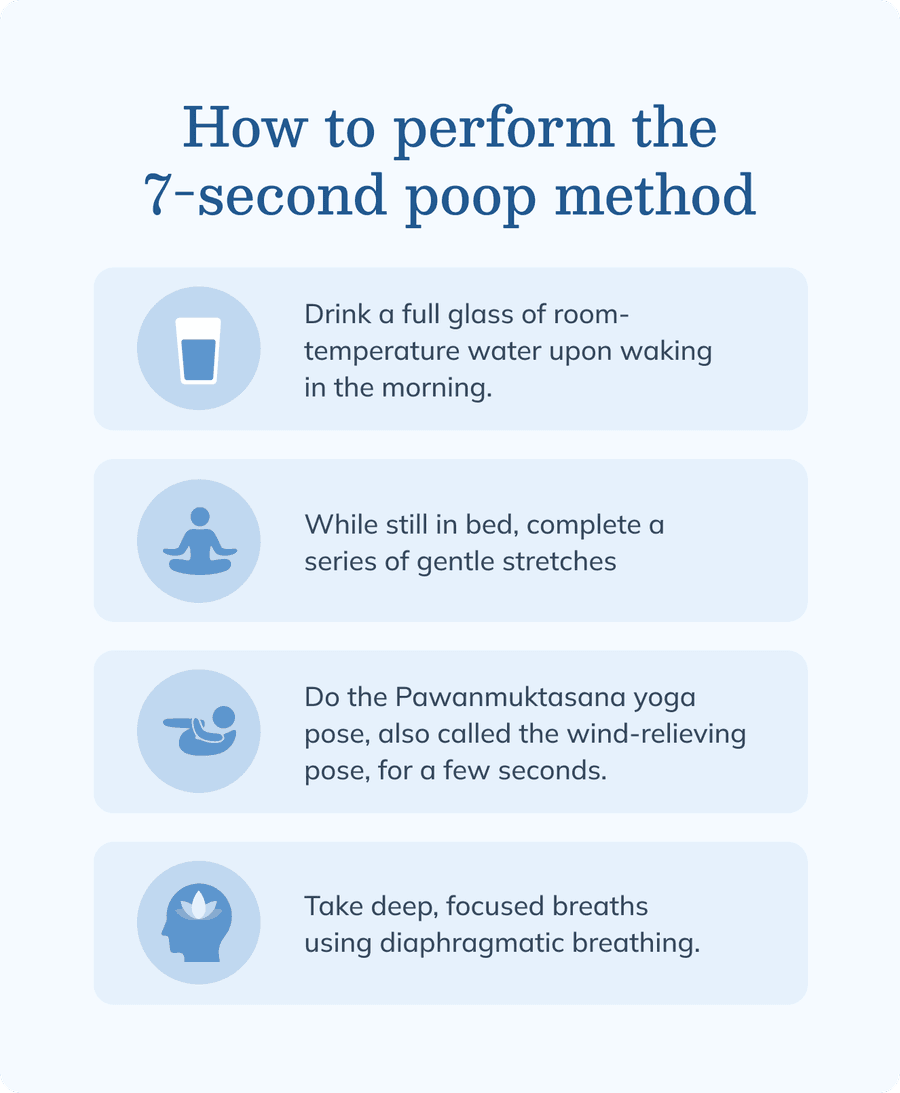
Step-by-Step Guide: Performing the 7-second poop method
- Drink a full glass of room-temperature water upon waking in the morning. This may help kickstart the digestive system, flush toxins, and rehydrate the body after fasting overnight.
- While still in bed, complete a series of gentle stretches to increase blood flow, reduce muscle stiffness, and further support the digestive system.
- Do the Pawanmuktasana yoga pose, also called the wind-relieving pose, for a few seconds. Lie on your back and hold your knees up to your chin to compress the colon, release trapped gasses, and stimulate the bowels.
- Take deep, focused breaths using diaphragmatic breathing. This method is suggested to relax the body, increase oxygenation, signal calm, and support digestion.
This morning ritual often takes less than a minute (sometimes just 7 seconds), so even people with overly busy schedules can implement it routinely to potentially experience regular bowel movements. For best results, consider completing the 7-second poop method every day.
Role of apple cider vinegar
Apple cider vinegar complements the 7-second poop method because studies suggest drinking 10 ml of apple cider vinegar (2 teaspoons) diluted in 200 ml (about 1 cup) of water at breakfast and dinner may help reduce occasional constipation.
Researchers also found that apple cider vinegar's benefits for GI health may include support for overall gastrointestinal health, enhanced digestion, and less oxidative stress. This may be due, at least in part, to its antioxidant properties.
Apple cider vinegar: The perfect complement
Apple cider vinegar complements the 7-second poop method by potentially improving digestion and providing extra health and wellness benefits.
Introduction to apple cider vinegar
Apple cider vinegar is a type of vinegar made by fermenting apples and their juices with yeast. It's often an ingredient in pickles, salad dressings, marinades, and many recipes. Its nutritional profile includes trace minerals, polyphenols, and antioxidants.
Digestive benefits
Studies suggest that apple cider vinegar may aid digestion by improving conditions in the gastrointestinal tract. Researchers also found that it may support healthy cholesterol levels and blood sugar levels.
However, researchers report that consuming high doses of acetic acid in vinegar might cause adverse side effects, including heartburn, stomach or throat irritation, tooth decay, nausea, or constipation. For this reason, studies suggest avoiding excessive doses of apple cider vinegar (consume no more than 2 tablespoons daily).
How to incorporate apple cider vinegar
Incorporating apple cider vinegar into the 7-second poop method is easy. Combine 2 teaspoons of apple cider vinegar with about 1 cup of warm or room-temperature water and drink it when you wake up each morning. Remember to breathe deeply, stretch, and do your wind-relieving yoga poses.
If you still struggle with occasional constipation, consider consuming the apple cider vinegar and water mixture later in the day, but don't exceed 2 tablespoons of vinegar.
Tips for getting started with the 7-second poop method
Getting started with the 7-second poop method is simple. Write down the steps needed each morning, so you remember. Drink a glass of water (mix in 1-2 teaspoons of apple cider vinegar if you'd like), stretch, complete the Pawanmuktasana pose while still in bed (fetal position lying on your back), and breathe deeply.
Continue your day by adopting healthy habits: eat nutritious fiber-rich foods, exercise regularly, drink plenty of water, get enough sleep, and minimize stress. Consider completing another 7-second poop method later in the day as needed.
Maintaining the practice
Make time for the 7-second poop method by prioritizing this gut health-supporting habit. Leave yourself a note at your bedside so you remember and talk with your doctor if you still struggle with constipation after several days or a week.
Common questions and myths
While the 7-second poop method is simple to implement, you might still have questions about this daily bowel movement-supporting routine.
Frequently asked questions about the 7-second poop method (FAQs)
Does the 7-second poop method really work?
More research is needed to determine if the 7-second poop method is effective for improving digestive health and easing constipation. But its components (drinking more water, stretching, doing yoga poses, and relieving stress with deep breathing) appear to benefit gut health.
When should I complete the 7-second poop method?
Complete the 7-second poop method right after you wake up each morning. You can repeat it other times throughout the day, but Dr. Sam developed it as a morning ritual.
When will I notice results from the 7-second poop method?
Consistency is key. After beginning a 7-second poop method morning ritual, you might experience improved digestive health and less constipation within several days or weeks. It's also vital to eat various plant-based foods rich in fiber, drink water throughout the day (not just in the morning), and exercise regularly. Chewing gum and drinking coffee may also help.
Myth busting
Consider the following common myths vs. facts when implementing the 7-second poop method:
Myth: The 7-second method involves straining for 7 seconds while holding your breath during bowel movements or rubbing your fists together.
Fact: While there are different versions of the 7-second pool method floating around on the internet, the 7-second poop method developed by Gina Sam, MD, involves the techniques described in this article.
Myth: Apple cider vinegar is bad for you.
Fact: While drinking apple cider vinegar in excess may cause unpleasant side effects, studies suggest that it may promote health perks such as support for: appetite, weight management, and healthy blood sugar levels.
Myth: It's normal to poop once or twice per week.
Fact: You should poop at least three times weekly, though many people have bowel movements more often — even several times daily. Passing fewer than three stools weekly or having difficulty passing stool is typically considered constipation.
Myth: The 7-second poop method is all I need to do to eliminate constipation.
Fact: Daily habits that may decrease the risk of constipation (regardless of if you do the 7-second poop method or not) include exercising regularly, eating 25-35 grams of fiber daily, drinking plenty of water, properly managing diabetes and other chronic diseases, and limiting certain medications.
The bottom line
The 7-second poop method offers a simple, low-risk morning routine that combines evidence-supported strategies to promote regular bowel movements. While the method itself has not been studied as a single intervention, its individual components—hydration, gentle movement, abdominal compression, and parasympathetic activation are well-supported by gastroenterological research.
Sleek consumer lab tests offer data, not direction
Influencer-driven lab companies with AI doctors? That’s not how real health functions. Fullscript Journeys gives you the easy lab testing experience you want and a provider to support you when the real work begins.